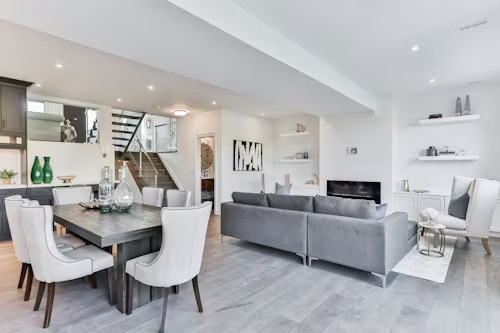

Protect the Parts of the Budget That Matter Most
Staying on budget during a renovation is not just about spending less. It is about spending more intentionally. In Toronto, where renovation costs can shift based on property condition, design choices, labour coordination, and permit requirements, homeowners often run into trouble when they cut the wrong parts of the project rather than planning the budget with real priorities from the beginning.
The first step is understanding that all renovation dollars do not carry equal value. Some choices affect comfort, durability, efficiency, and long-term performance. Others are easier to upgrade later. Homeowners usually protect the budget more effectively when they separate the core construction needs from the cosmetic wish list. Structural work, waterproofing, mechanical upgrades, layout improvements, lighting planning, quality cabinetry, and durable flooring often deserve more protection than decorative accents that can be changed over time.
This is especially true on larger home renovation in Toronto projects, where multiple spaces are connected. If the renovation includes layout changes, electrical work, plumbing updates, new flooring, millwork, and finish coordination, the strongest budgets are the ones that follow the logic of the build. Hidden work should be priced and prioritized honestly. Skipping or underfunding the technical foundation of the project often creates more expense later through rework, reduced performance, or a finished result that still feels incomplete.
One of the most common budgeting mistakes is finalizing the design direction too late. When homeowners begin construction with only a loose idea of what they want, selections start happening under pressure. That tends to create rushed choices, delayed ordering, and inconsistent spending. A renovation budget performs much better when the major decisions are made early enough to support accurate pricing. Cabinet style, tile range, plumbing fixtures, flooring level, lighting needs, and appliance expectations all influence cost. The clearer those items are at the beginning, the less likely the project is to drift.
Scope Discipline Prevents Cost Creep
Scope discipline also matters. Not every good idea belongs in the current renovation. Homeowners often add work mid-project because once walls are open, it becomes tempting to improve adjacent spaces as well. Sometimes that is the right call. Often, it is a sign that the original scope was not prioritized properly. Creating a must-have list, a high-impact list, and a future-upgrade list makes it easier to protect the budget without feeling like every compromise is a loss.
Kitchens are a perfect example of where smart budgeting creates better value than cheap budgeting. A homeowner may spend less by choosing lower-cost finishes, but if the layout, storage, and lighting are poorly handled, the kitchen still will not work well. By contrast, a carefully planned kitchen renovation in Toronto can deliver excellent long-term value even when the style choices remain restrained. Functional cabinetry, durable counters, good task lighting, and efficient workflow often matter more than trend-driven upgrades that raise the price without improving daily use.
Contingency is another essential part of budget control, especially in older Toronto homes. A contingency allowance does not mean the project is poorly planned. It means the homeowner understands that site conditions can create surprises. Electrical upgrades, plumbing corrections, framing adjustments, moisture issues, and hidden deficiencies are more likely in older properties. Without contingency, any unexpected discovery can throw the entire budget into panic mode. With contingency, decisions remain calmer and more strategic.
Material timing can also affect costs. Long-lead products, backorders, and last-minute substitutions can create delays or force rushed choices that are more expensive than planned. Renovations usually move better when key products are selected and ordered at the right stage rather than left until construction is already underway.
Use Contingency and Phasing the Right Way
Another important principle is knowing what can be phased. Some homeowners assume that if a renovation starts, every dream upgrade needs to happen at once. That is rarely necessary. Decorative lighting, feature walls, custom built-ins, or certain finish-level upgrades may be easier to postpone than structure, flooring continuity, or rough-in work. Good budget planning does not always reduce ambition. Sometimes it simply organizes ambition in a smarter order.
Communication with the contractor also plays a major role. Budget problems often grow when expectations, selection levels, or scope assumptions were never aligned clearly. A renovation runs more predictably when the homeowner and contractor are speaking the same language about quality level, priorities, and what is truly included.
The goal is not to create the cheapest renovation possible. The goal is to create the best renovation possible within a realistic budget. That means investing where the home will feel and perform better every day, while staying flexible on details that can evolve later.
For Toronto homeowners, budget control is ultimately about clarity. When the scope is defined, the priorities are honest, the key decisions are made in time, and the contractor is aligned with the plan, the renovation becomes far easier to manage. You do not stay on budget by stripping value out of the project. You stay on budget by understanding where value actually lives.


